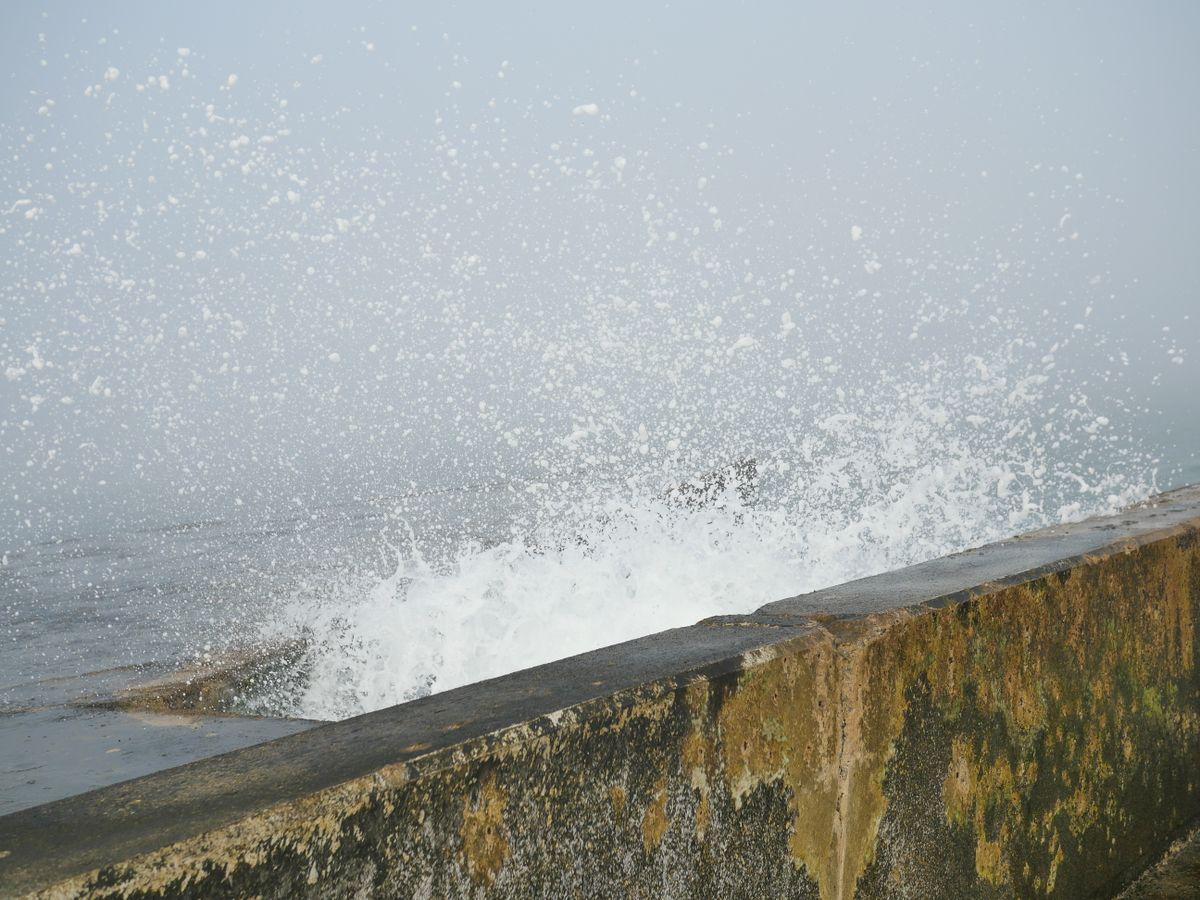
By the time a seawall visibly leans, it's often been under stress for a while. Catching the earlier signs gives you more repair options — and a lower repair bill.
Early warning signs
- Soil settling, soft spots, or small sinkholes forming in your yard near the wall
- Hairline cracks or spalling concrete, especially near the top cap
- Water flowing through the wall face at low tide
- Gaps opening at panel seams
Later-stage signs
- Visible tilting or bulging along the wall
- Significant soil loss or a collapsed section behind the wall
- Structural separation at corners or return walls
Why drainage is usually the real cause
Most seawall failures trace back to blocked or missing drainage. Water trapped behind the wall builds hydrostatic pressure until something gives. A repair that doesn't address drainage is likely to fail again.
What causes seawalls to fail in the first place
Beyond drainage, a handful of root causes account for nearly every seawall failure we see on the First Coast. Age is the obvious one — timber seawalls installed decades ago are simply reaching the end of their service life, and even well-built concrete panels eventually spall as rebar corrodes and expands. Marine borer activity attacks untreated or poorly treated timber walls from the water side, often hollowing them out from within before any visible sign appears. And missing or failed tie-backs — the anchoring rods that hold a wall in place against soil pressure from behind — turn what should be a stable structure into one waiting for the right storm surge or king tide to push it over.
How urgent is urgent
Not every sign on this list means an emergency, but the distinction matters for how you schedule the fix. Hairline cracks, minor settling, and small drainage seeps are worth addressing on a normal timeline — get it assessed and scheduled within a few months. Visible tilting, active soil loss, or any section that has moved since you last looked is a different category entirely: stop using the area above and near the wall, keep vehicles and heavy loads off adjacent ground, and get a structural assessment on an urgent basis. Waiting through a full hurricane season with a visibly compromised wall is one of the more expensive gambles a waterfront owner can make.
Repair vs. replacement
Whether a failing seawall gets repaired or replaced usually comes down to how much of the original structure is still sound. Localized cracking, a few failed tie-backs, or drainage problems on an otherwise intact wall are typically repairable — patch, re-anchor, and correct the drainage, often for a fraction of replacement cost. Widespread panel failure, significant soil loss behind large sections, or a wall that's tilted more than a few degrees usually crosses the line into replacement territory, since patching a structurally compromised wall just delays the same failure. A contractor who's willing to say “this needs a full assessment before we know which category it's in” is giving you a more honest answer than one who quotes a repair sight-unseen.
What to do if you spot these signs
Get a professional structural assessment before the issue progresses from repairable to requiring full replacement. Early cracking with intact tie-backs is often a repair; widespread displacement usually isn't. In the meantime, keep a photo record of the area, note the date you first noticed the change, and avoid parking vehicles or storing heavy equipment near the affected section until it's been evaluated.