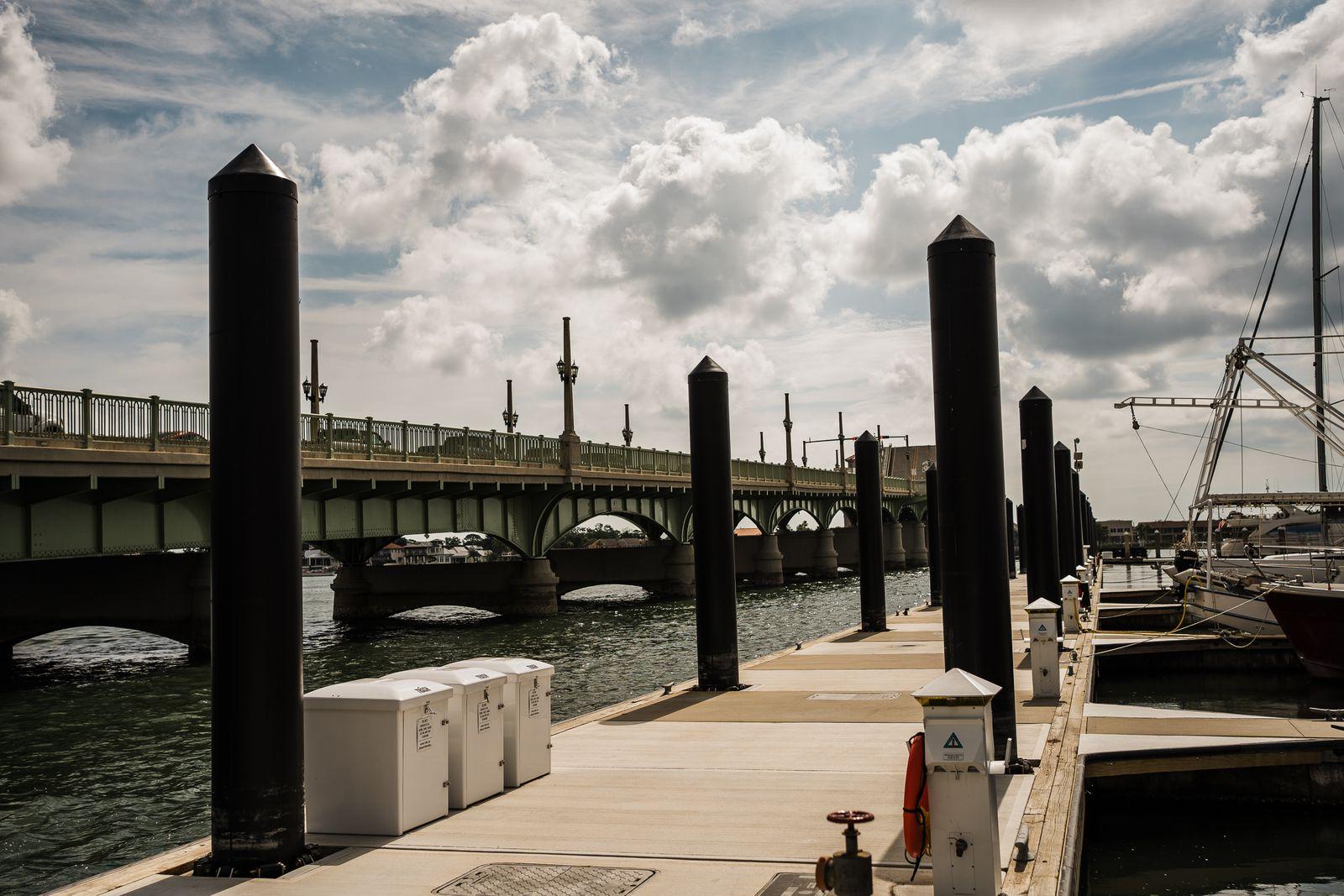
St. Augustine has some of the oldest working waterfront on the First Coast, and that age shows up in repair calls: rebuilds that uncover decades-old construction methods, hardware that predates current marine-grade standards, and — near the historic downtown district — permitting considerations that don't apply everywhere else.
Typical repair costs
- Decking replacement: $300-$1,200
- Hardware upgrades to current marine-grade standards: $500-$2,000, common on older Davis Shores and downtown-adjacent docks
- Piling repair near the Matanzas Inlet: $900-$2,800, reflecting stronger tidal current and marine borer exposure
Matanzas River vs. San Sebastian River
Properties on the Matanzas side, closer to the inlet, generally see stronger tidal exchange and correspondingly more piling wear than the more sheltered, industrial-adjacent San Sebastian River side. That difference is worth mentioning to your contractor since it affects material recommendations, not just price.
Historic district considerations
If your property falls within St. Augustine's historic district boundaries, expect an extra review step in permitting for anything beyond in-kind repair. It doesn't typically change repair cost directly, but it does affect timeline, so build it into your planning if your project involves more than swapping a few boards.
What older docks hide
St. Augustine repair projects uncover history more often than anywhere else on the First Coast: pilings from a previous dock cut off below the waterline, hardware standards from decades past, framing repairs layered over earlier framing repairs. Budget-wise, that argues for a contingency on older structures — a straightforward decking job on a 40-year-old Davis Shores dock sometimes becomes a framing conversation once the boards come up. A contractor who opens a section and assesses before quoting the whole job protects you from both surprise costs and surprise shortcuts.
Salinity and the inlet effect
Proximity to the St. Augustine Inlet means higher salinity than the river cities to the north — and higher salinity means faster hardware corrosion and more marine borer pressure on untreated wood. Owners near the inlet should favor stainless hardware on replacements and consider piling wraps as cheap insurance. It also shortens the honest interval between inspections: what's a three-year check on a sheltered canal is closer to a two-year check on the Matanzas.
Planning your repair
Get estimates in the late fall through spring window when scheduling is fastest, ask for line-item scopes that separate structural from cosmetic work, and — if your dock is among the city's older structures — treat the first repair visit as a chance to build a prioritized punch list rather than a one-off fix. Knowing what's coming in years two and three turns dock ownership from surprise management into a budget line.