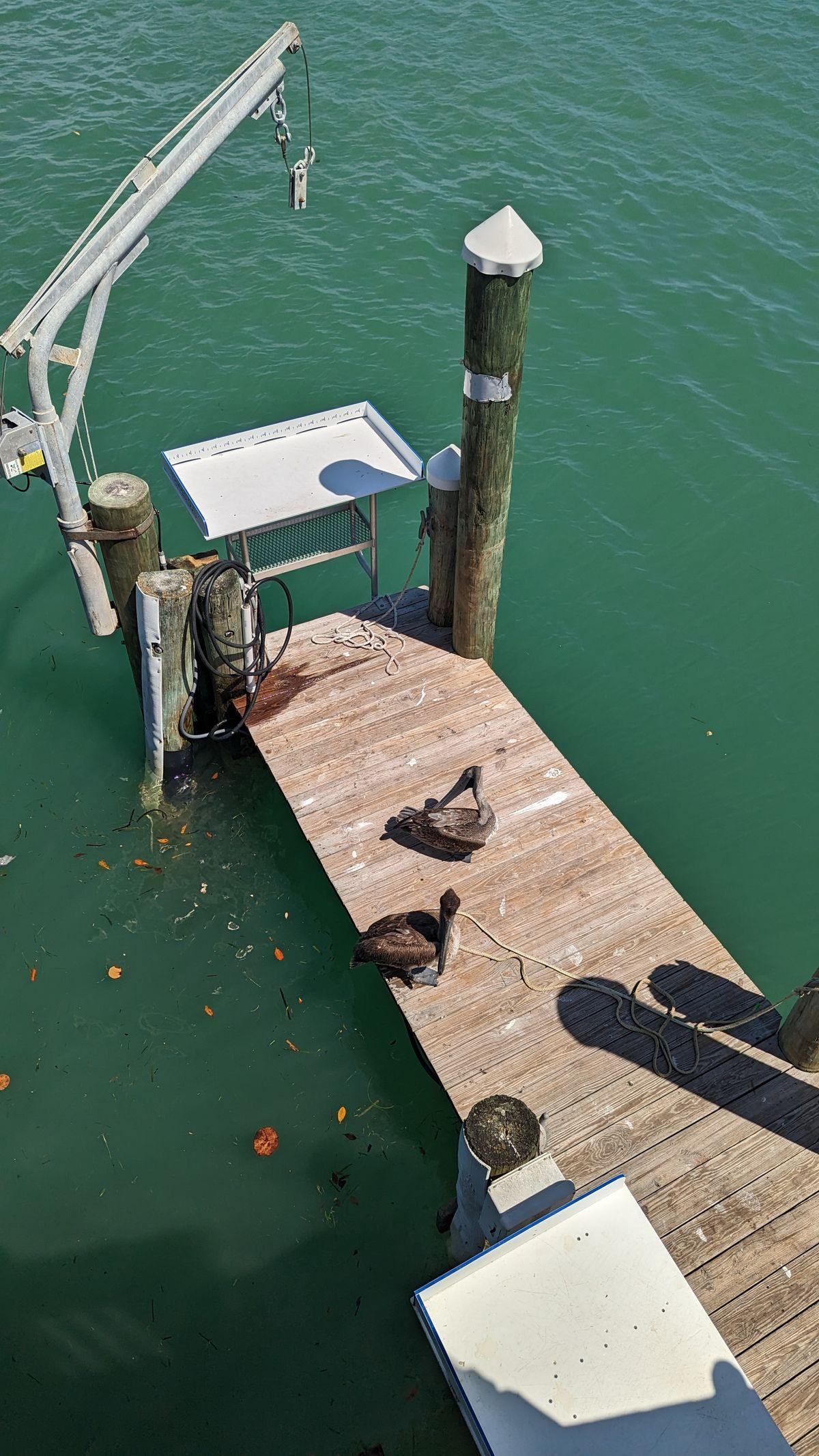
Dock Extensions
Shallow water at low tide, a growing boat, or simply wanting more room to fish and entertain are the three reasons we get called for dock extensions most often — and each has a different engineering answer.
Dock Extensions in Northeast Florida
Most dock extension calls on the First Coast trace back to one of three problems: the water got too shallow, the boat got too big, or the family outgrew the deck space. Shallow water is the classic — tidal rivers and canals silt in over the years, and a dock that floated a boat comfortably at low tide a decade ago now leaves it sitting in mud twice a day. Extending the dock out to deeper water is usually far cheaper than dredging, which carries its own difficult permitting and recurs as the waterway keeps depositing sediment.
The first technical question is always riparian rights: how far your property's water access legally extends and how much clearance the navigable channel requires. Every extension has to stay inside your riparian corridor and outside setbacks from the channel and neighboring property lines — limits that vary by county and waterway. We start extension projects with that survey work, because it determines whether the extra thirty feet you want is straightforward, needs a variance, or isn't available at all. It's a far better conversation to have on paper than after mobilization.
Structurally, an extension is only as good as the dock it ties into. The connection point carries concentrated loads, so we assess the existing structure's framing and pilings before designing the addition — if the last section of the old dock is soft, tying new construction into it just moves the failure point. Done right, the new section is driven on its own pilings, joined with through-bolted marine hardware, and matched to the existing deck height and material so the finished dock reads as one structure rather than an obvious add-on.
Extensions are also the natural moment to plan for a boat lift. Reaching deeper water is often the prerequisite for a lift installation, and setting the lift pilings while the barge and crew are already on site is dramatically cheaper than mobilizing twice. If a lift is anywhere in your two-year plan, design the extension around it now.
Signs You Need Dock Extensions
- Your boat bottoms out or scrapes at low tide
- You've upgraded to a larger boat that no longer fits comfortably
- You want to add a boat lift but don't have the space or depth
- You need more deck area for seating, storage, or entertaining
How It Works
- 1Depth & riparian survey
We confirm water depth at mean low tide and how far your riparian rights allow you to extend.
- 2Design & permitting
We design the extension and secure any required permit amendment or new permit.
- 3Construction
We tie the new section structurally into your existing dock for a seamless, code-compliant result.
Why Invest in Dock Extensions
- Solves low-tide access problems without relocating the entire dock
- Can be designed around a future boat lift addition
- Matches existing materials and finish where desired
What It Costs
- Additional length needed to reach target depth
- Matching vs. upgrading materials
- Permitting complexity for extending past the existing footprint
Dock Extensions Questions
Get a Free Dock Extensions Estimate
Get matched with local contractors serving all of Northeast Florida.