Canopies are the number one culprit
Boat lift canopies act like sails in sustained high wind, transferring enormous stress to the lift frame and supporting pilings. Removing or properly folding canopies ahead of a storm is one of the single highest-impact things an owner can do.
Undersized or aging pilings
Storm surge and wave action test piling stability more than routine use ever does. A lift that's felt stable for years can fail during a storm if pilings have quietly deteriorated at the mudline.
Cables under load during surge
A boat left in the water during a storm, or a lift raised but with worn cables, adds risk during surge and wave action. Cables should be inspected annually and replaced proactively, not reactively.
Pre-season checklist
- Inspect cables, motor, and drive components for wear before June 1st
- Confirm supporting pilings show no leaning or looseness
- Plan for canopy removal or securing ahead of any storm watch
- Identify what needs to come off the dock entirely (cushions, electronics, loose gear) before a storm approaches
The boat-on-or-off decision
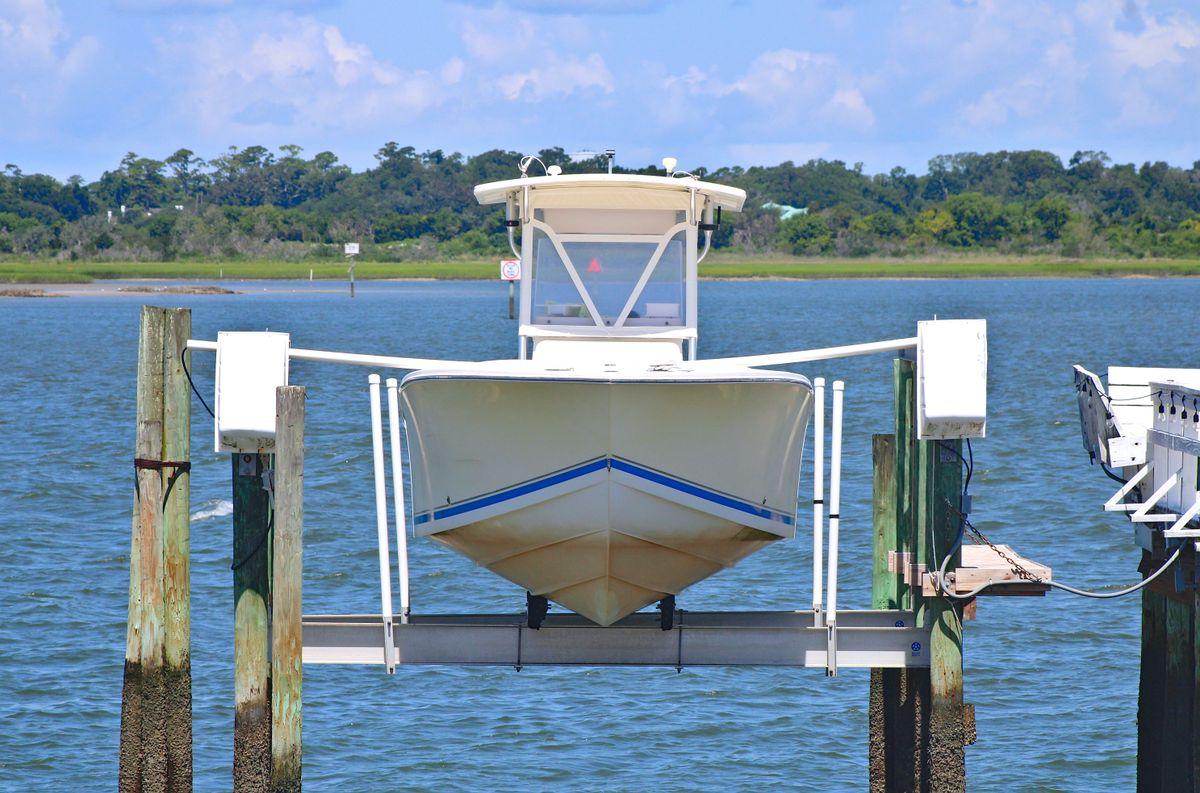
The question every lift owner faces when a storm approaches: leave the boat on the lift or move it? The standard doctrine for named storms with surge forecast is off — surge can float a boat free of its cradle or submerge the entire lift, and a boat adrift in a marina does catastrophic damage to everything around it. Haul it or run it to protected water, then secure the empty cradle at mid-height so it can't slam through its travel range in the wind. For lesser systems without surge risk, a well-maintained lift raised high, canopy off, power off, is a reasonable plan.
After the storm
Resist the urge to run the lift immediately. If the motor or wiring went underwater, running it can finish off components that were salvageable — salt inside a motor's windings corrodes from within even after it dries. Photograph everything as found for insurance, check cables for new kinks or fraying, look for piling movement, and have the electrical checked before energizing. A post-storm inspection visit costs little against the value of catching surge damage before it compounds.
The insurance angle
Lift damage claims go smoother with two things owners can control: pre-storm photos establishing condition, and service records showing the lift was maintained. An annual service invoice is, among its other virtues, evidence that the cable failure was storm-caused rather than neglect — a distinction that decides claims.