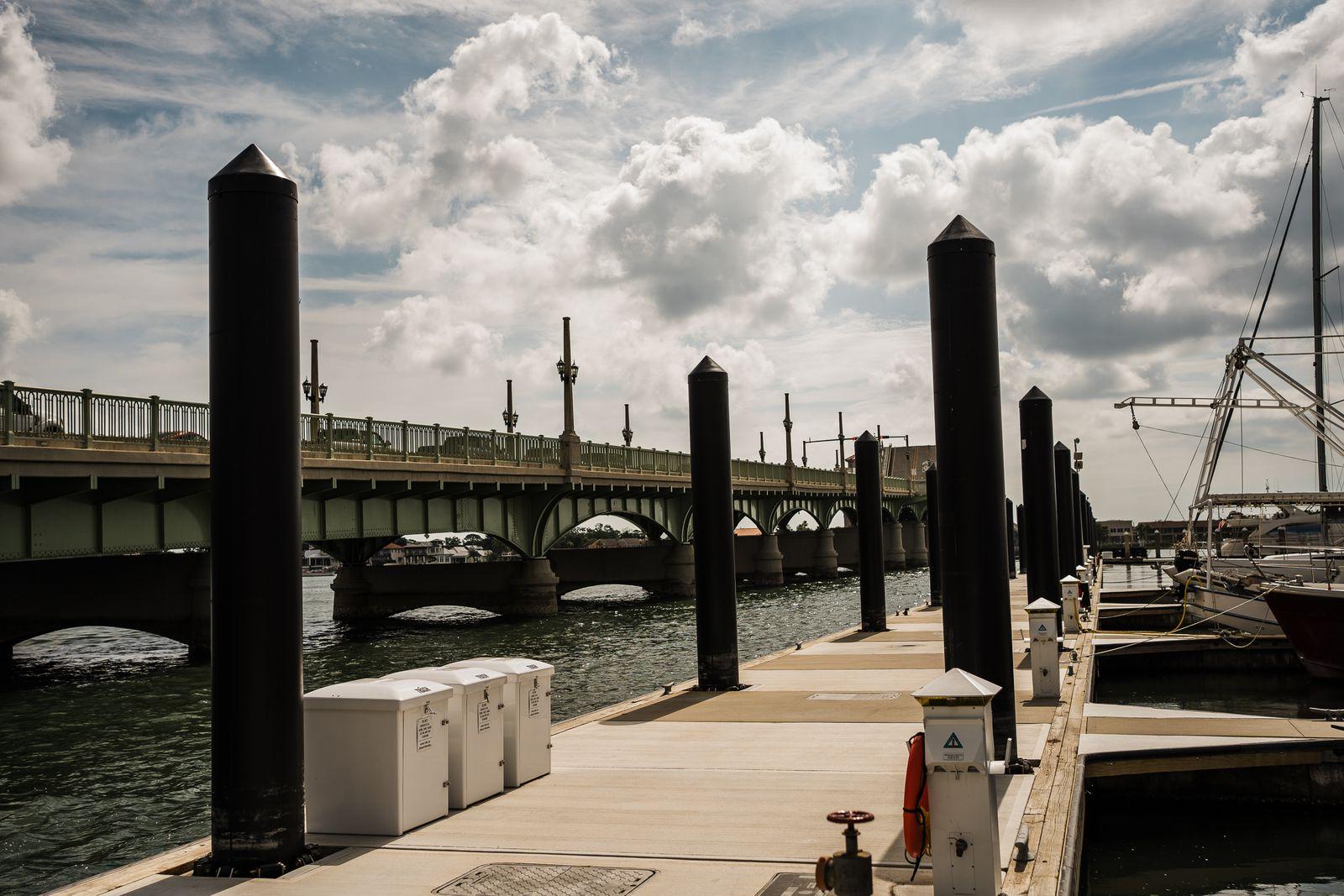
Boat Lift Installation in St. Augustine, FL
As the nation's oldest continuously occupied European-founded city, St. Augustine has some of the First Coast's oldest working waterfront — from historic downtown seawalls near the Bridge of Lions to residential docks on Davis Shores and the San Sebastian River — and that age means dock and seawall rebuilds here often uncover decades-old construction that needs to be brought up to current code. Along Matanzas River, San Sebastian River, Intracoastal Waterway, requests for boat lift installation are among the most common we see from St. Augustine waterfront owners.
Boat Lift Installation on Matanzas River
The Matanzas River's strong tidal exchange near the inlet and the San Sebastian's more sheltered, industrial-adjacent waters call for different dock strategies depending on which side of the peninsula a property sits. That matters directly for boat lift installation: The single most common boat lift mistake we correct is undersizing — a lift rated too close to a boat's actual weight fails early and often. We size every installation with margin for your specific vessel and water conditions.
Common Local Issues
Historic district permitting rules, aging bulkheads original to older homes, and strong Matanzas Inlet tidal currents are the recurring themes in St. Augustine dock and seawall work. Near Bridge of Lions and throughout Davis Shores, Vilano Beach, San Sebastian Harbor area, these conditions shape how we approach every boat lift installation project.
Boat Lift Installation: What to Know
A boat lift is the single best protection you can buy for a boat that lives on Northeast Florida water. Hulls stored in brackish water grow barnacles and slime within weeks, bottom paint becomes a recurring expense, and through-hull fittings sit in corrosive water around the clock. Lifted storage eliminates nearly all of it — and when a tropical system threatens, a lift gets your boat out of the surge zone in minutes instead of leaving you hunting for a haul-out slot alongside every other owner on the river.
Sizing is where lift installations most often go wrong, and it's the first thing we check. The number that matters isn't the boat's brochure dry weight — it's real-world weight: fuel (at roughly six pounds per gallon), water, batteries, gear, T-top, and the safety margin for rainwater in the bilge. The working rule is lift capacity at least 30–40% above loaded weight. An undersized lift strains its motors and cables constantly and fails early; correctly sized, the same components last years longer. Lift type follows the site: four-post cradle lifts for most open water, elevator lifts for tight canals and seawall situations where outboard pilings won't fit.
The supporting structure deserves as much attention as the lift hardware. Lift pilings carry the full weight of the boat plus dynamic loads from wind and wake, so they need adequate diameter and embedment for the bottom conditions — the soft muck bottoms common on river tributaries demand deeper setting than hard sand. Electrical is its own discipline: marine-rated wiring, GFCI protection, and properly enclosed switches, because dockside power in a saltwater environment is uniquely unforgiving of shortcuts.
Permitting for a lift added to an existing dock is generally simpler than dock construction itself, but it's still a permit in every First Coast county, and HOA or architectural review adds a layer in many planned waterfront communities. From contract to first launch, a typical installation runs a few weeks including permitting, with the on-site work usually done in one to three days once pilings are set.
Boat Lift Installation Costs in St. Augustine
Across St. Augustine and the surrounding St. Johns County waterfront, boat lift installation projects typically fall within $6,000 – $25,000+ depending on capacity and type. Where a specific project lands in that range comes down to boat weight and lift capacity required, direct lift vs. cradle vs. elevator lift type, piling reinforcement needs — and to site conditions on Matanzas River, since access, water depth, and bottom composition all affect labor and equipment needs. The most reliable way to know your number is a site-specific assessment: photos and a conversation produce a preliminary estimate, and an on-site visit turns it into a firm written quote.
Serving All of St. Augustine
Including Davis Shores, Vilano Beach, San Sebastian Harbor area, West Augustine riverfront and waterfront property along Matanzas River and San Sebastian River.
Permitting for Boat Lift Installation in St. Johns County
St. Johns County permitting adds a wrinkle most Florida counties don't have: environmental sensitivity. Large stretches of shoreline here border the Guana Tolomato Matanzas National Estuarine Research Reserve or fall within St. Augustine's historic districts, and both add review layers beyond the standard county-plus-FDEP path. Projects near the reserve see closer environmental scrutiny of shading, seagrass, and marsh impacts; historic-district properties get architectural review. None of this prevents good projects — it rewards applications prepared by contractors who know what these reviewers look for, which routinely saves months.
Seasonal & Storm Considerations in St. Augustine
River frontage here means big fetch: when wind lines up with a wide stretch of the St. Johns, waves build in a way canal properties never see, and hurricane season stacks storm surge on top of already-large tidal swings. Structures on open river face the region's heaviest year-round loading — which is why hardware condition and piling depth matter more on the river than anywhere else, and why pre-season inspections between May and June are the highest-value maintenance window of the year. Brackish river water also splits the difference chemically: salty enough to corrode standard hardware, fresh enough in wet years to host different growth than the inlets see.
Signs You Need Boat Lift Installation
- You currently dock your boat in the water full-time
- Your boat's hull shows marine growth from constant water exposure
- You're upgrading to a heavier or larger boat
- Storm forecasts have you wanting your boat out of the water quickly
How It Works
- 1Boat & site assessment
We confirm your boat's actual weight (not just published dry weight) and your dock's structural capacity.
- 2Lift selection
We recommend lift type — direct lift, cradle, or elevator — and capacity with appropriate safety margin.
- 3Structural prep
We reinforce or add pilings as needed to support the lift under full load and wind conditions.
- 4Installation & calibration
We install, wire, and calibrate the lift, then walk you through safe operation.
Why It's Worth Doing Right
- Protects your hull from marine growth, blistering, and constant water exposure
- Extends time between bottom paint and hull maintenance
- Gets your boat out of the water fast ahead of storms
- Sized with safety margin, not just to the minimum rated capacity
Boat Lift Installation FAQ — St. Augustine
Get a Free Boat Lift Installation Estimate in St. Augustine
Get matched with local contractors serving St. Augustine and Matanzas River.